
As of March 22, 2026, the Iran-Israel war has entered its fourth week, representing one of the most consequential military conflicts in Middle Eastern history. What began on February 28 with a coordinated U.S.-Israeli decapitation strike targeting Iran’s supreme leadership has evolved into a multi-front war involving direct missile exchanges, naval confrontations in the Strait of Hormuz, sophisticated cyber operations, and escalating regional spillover affecting Gulf states, Lebanon, and Iraq. This comprehensive analysis examines the latest developments, strategic frameworks, casualty statistics, and the divergent objectives that define this conflict, drawing on real-time data from the past 72 hours.

Part I: The Strategic Landscape – Defining the Conflict
The War’s Origins and Escalation
The current war traces its immediate origins to February 28, 2026, when Israel and the United States launched a coordinated military campaign against Iran. According to the International Institute for Strategic Studies (IISS), the opening salvo targeted a leadership meeting in Tehran that included Supreme Leader Sayyid Ali Khamenei, Iran’s defense minister, the chief of staff of the armed forces, and the commander of the Islamic Revolutionary Guard Corps (IRGC). All were killed in the attack .
This “decapitation strike” represented a dramatic escalation from the shadow war that had characterized Iran-Israel relations for decades. The operation utilized long-range munitions, including Israeli air-launched ballistic missiles and U.S. Tomahawk cruise missiles, achieving complete tactical surprise .

Strategic Objectives: Divergence Between Allies
A critical analytical dimension of this conflict involves understanding the divergent objectives of the two primary allied powers. Professor Hussein Banai of Indiana University’s Hamilton Lugar School argues that the United States and Israel are fighting fundamentally different wars under the same military umbrella .The War’s Origins and Escalation
Israel’s Objective: Regime Change – Prime Minister Benjamin Netanyahu has articulated an explicit aim: not merely a weakened or denuclearized Iran, but the complete end of the Islamic Republic as a governing system. Israeli strategy focuses on degrading Iran’s capacity to function as a regional system, targeting military industry, command structures, proxy financing networks, and the channels that enable Tehran to project power across the Middle East .
America’s Ambiguous Position – The Trump administration has demonstrated strategic incoherence, simultaneously expressing openness to negotiations, making maximalist demands, suggesting the U.S. might help select Iran’s next leader, and issuing threats against Iranian energy infrastructure. Secretary of State Marco Rubio has acknowledged “different nuances” between the allies on regime change—a phrase Banai describes as a diplomatic understatement .
This strategic divergence matters profoundly because a campaign aimed at regime change requires different force structures, duration, and risk tolerance than one aimed at nuclear disarmament or military degradation.

Part II: Latest Operational Developments (March 20-22, 2026)
Missile Strikes on Dimona and Arad: A Tactical Setback for Israel
The most significant recent development occurred on March 21-22, when Iranian missiles successfully evaded Israel’s vaunted air defense systems and struck two southern Israeli cities, demonstrating Tehran’s continued ability to inflict damage despite three weeks of sustained bombing.
Dimona Strike – Iranian missiles struck the city of Dimona, located approximately eight miles from Israel’s main nuclear research facility, which is widely believed to be connected to the country’s nuclear weapons program. Iran’s state broadcaster, IRIB, confirmed that the attack specifically targeted nuclear facilities. According to the International Atomic Energy Agency (IAEA), there was no damage to nuclear sites . A 10-year-old boy suffered serious injuries from shrapnel, and a woman sustained moderate wounds.
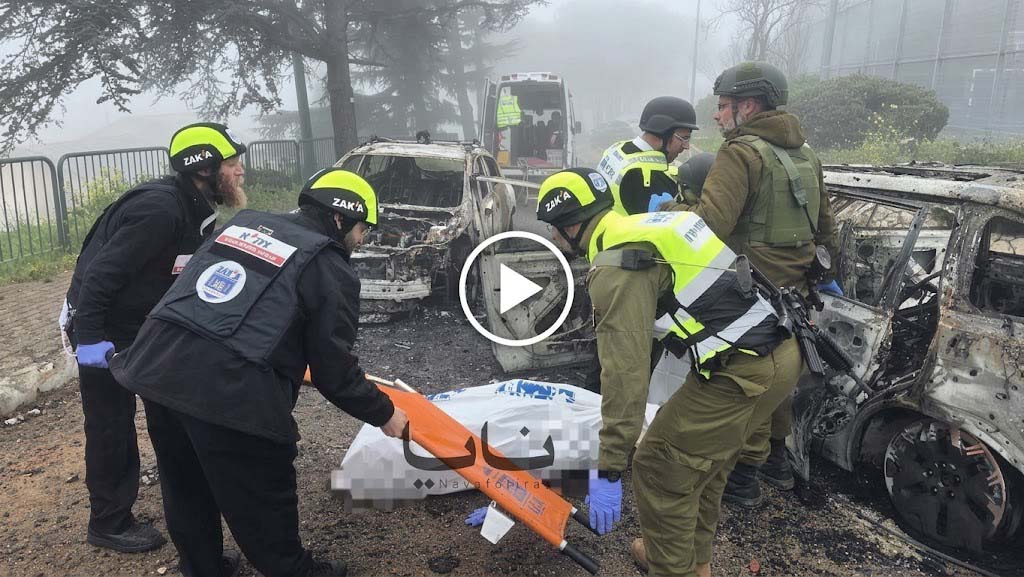
Arad Strike – Approximately 25 miles northeast of Dimona, a ballistic missile struck the city of Arad, causing extensive destruction. Israeli emergency rescue services reported at least 115 casualties in Arad, with 10-22 people suffering serious injuries and rescue teams searching for trapped victims in collapsed buildings .
The Israeli military acknowledged that its air defense systems failed to intercept the incoming missiles and has opened an investigation into the operational failure. Prime Minister Netanyahu described the situation as “a very difficult evening” in a social media post .
Iran’s Long-Range Strike on Diego Garcia
In a demonstration of strategic reach, Iran launched two ballistic missiles on March 20 targeting the joint U.S.-British military base on Diego Garcia, an island in the Indian Ocean more than 2,500 miles from Tehran. According to Britain’s Ministry of Defense, one missile failed mid-flight, while the other was shot down by an American warship .
This audacious attack raises significant questions about Iran’s missile capabilities and strategic intent. The ability to strike targets at such extreme range—far beyond the Persian Gulf and Israel—represents a new operational dimension to the conflict.
U.S. and Israeli Strikes Intensify
In response, U.S. and Israeli forces have escalated their campaign:
- Target Count: Admiral Brad Cooper of CENTCOM reported that U.S. forces have attacked more than 8,000 targets since the war began, including 130 Iranian naval vessels .
- Underground Facilities: The U.S. bombed an underground coastal facility used to store anti-ship cruise missiles, mobile launchers, and equipment for attacking commercial shipping .
- Tehran Strikes: The Israeli military conducted strikes across Tehran, targeting factories developing critical components for ballistic missiles and an alleged nuclear facility near Natanz, though Israel denied targeting nuclear sites .
- Future Operations: Israeli Defense Minister Israel Katz stated that U.S.-Israeli attacks on Iran will “escalate significantly” in the coming week .
The Gulf Front: Expanding Regional Conflict
The war has now spread to involve multiple Gulf states, with Iran targeting U.S. military installations across the region.
UAE Targets – Iran’s IRGC claimed to have struck al-Dhafra and al-Minhad air bases in the United Arab Emirates using Fattah, Qadr, and Emad missile systems. The UAE confirmed intercepting three ballistic missiles and eight drones launched from Iran .
Kuwait – The Ali al-Salem military base was targeted, with Iran claiming successful strikes against U.S. installations .
Saudi Arabia – Saudi air defenses intercepted a ballistic missile targeting Riyadh, while two other missiles fell in uninhabited areas. The kingdom also expelled five Iranian diplomats, declaring them persona non grata for “continuing flagrant attacks” .
Strait of Hormuz – President Trump has demanded that Iran fully open the Strait of Hormuz within 48 hours or face U.S. strikes on Iranian power plants. The strait, through which approximately 34% of seaborne oil trade flows, has been largely choked off by Iranian threats and operations .

Part III: Comprehensive Casualty Analytics
Total Casualties by Country (as of March 22, 2026)
The human toll of this conflict continues to mount. Based on data compiled from official sources and human rights organizations:
| Country | Civilian Deaths | Military/Combatant Deaths | Total Deaths | Wounded |
|---|---|---|---|---|
| Iran | 1,354-1,398+ | ~1,760 | 3,114+ | 8,000+ |
| Lebanon | 100+ (children) | ~868 | 1,024+ | 2,740+ |
| Israel | 15 | 2 | 17+ | 175+ |
| United States | 0 | 13 | 13 | Unknown |
| UAE | 0 | 8 | 8 | Unknown |
| Iraq | Unknown | 60+ | 60+ | Unknown |
| Kuwait | Unknown | 4 | 6 | Unknown |
| Bahrain | 0 | 2 | 2 | Unknown |
| Oman | 2 | 0 | 2 | Unknown |
| Saudi Arabia | 2 | 0 | 2 | Unknown |
| Syria | 4 | 0 | 4 | Unknown |
| France | 0 | 1 | 1 | 6 |
Sources: HRANA, Lebanese Health Ministry, Israeli Emergency Services, U.S. Department of Defense, CNA reporting
Key Statistical Observations
- Iranian Civilian Toll: The Human Rights Activists News Agency (HRANA) reports 3,114 total Iranian deaths as of March 17, including 1,354 civilians—207 of whom are children. This represents a significant increase from official Iranian government figures (1,270) and UN ambassador reports (1,348), though the discrepancy may reflect inclusion of IRGC casualties not counted in civilian totals .
- Lebanon’s Escalating Crisis: Israeli strikes on Hezbollah positions have killed over 1,000 Lebanese, with the World Health Organization confirming more than 100 children among the dead. Over 800,000 people have been displaced within Lebanon .
- U.S. Military Losses: Thirteen American service members have died, including six in a mid-air tanker crash over Iraq and seven in direct combat operations .
- Israeli Casualties: While Israeli civilian deaths remain relatively low (15) due to air defense systems, the recent strikes on Dimona and Arad produced 175 wounded—the largest single-day casualty total for Israeli civilians since the war began .

Part IV: Military Analysis – The Air Campaign and Naval Dimension
Air Supremacy and the Attrition Strategy
According to IISS analysis, the U.S. and Israel achieved air supremacy within the first hours of the conflict. Israeli Air Force flew 200 fighter jets to destroy Western Iran’s air defenses, while U.S. MQ-9 Reaper drones conducted surveillance over Tehran and Shiraz .
The campaign follows an attrition strategy rather than seeking a single decisive blow. As analysts at the Begin-Sadat Center for Strategic Studies note, “Israel has also understood from the start that this will be a two-way war—i.e., Israel will suffer casualties and damage too.” The American and Israeli strategy involves systematically working down a list of targets, with thousands already struck .
Naval Operations and Maritime Security
The naval dimension has proven critical, with the U.S. deploying two carrier strike groups—centered on USS Abraham Lincoln and USS Gerald R. Ford—in the northern Arabian Sea and Eastern Mediterranean respectively .
Key naval developments include:
- Vessel Destruction: U.S. forces have sunk or destroyed at least nine Iranian naval vessels, including a Jamaran-class corvette and an Alvand-class frigate .
- Commercial Shipping Disruption: Major shipping operators are rerouting away from the region as Iranian attacks disrupt port operations in Bahrain, Oman, and the UAE. Electronic jamming is affecting maritime tracking systems .
- International Response: Twenty-two countries, including Britain, France, Germany, and Japan, have signed a statement indicating readiness to ensure safe passage through the Strait of Hormuz .
Part V: The Cyber Front – Warfare Beyond the Battlefield
While kinetic operations dominate headlines, a sophisticated cyber campaign has unfolded alongside the physical conflict. According to analysis from the Institute for Defence Studies and Analyses (IDSA), coordinated cyber and space activities degraded Iranian communications, sensors, and command-and-control networks before the first bombs were dropped .
U.S.-Israeli Cyber Operations
General Dan Caine, Chairman of the Joint Chiefs of Staff, stated that “the first movers were USCYBERCOM and USSPACECOM, layering non-kinetic effects, disrupting and degrading and blinding Iran’s ability to see, communicate and respond” .
Key cyber operations included:
- Internet Blackout: Iran’s internet connectivity dropped to approximately 4% of normal levels due to multi-layered attacks on BGP routing, DNS infrastructure, and SCADA/ICS systems .
- Targeted Infrastructure: The Israeli Defense Forces destroyed the IRGC’s cyber and electronic headquarters and its Intelligence Directorate in aerial strikes on the second day of the conflict .
- Psychological Operations: Israeli forces reportedly hijacked Iranian state broadcaster IRIB’s feed to air political messages urging resistance against the government. A widely used Iranian prayer application was also compromised to disseminate messages encouraging security personnel to defect .
Iran’s Cyber Response
Iran has demonstrated significant cyber capabilities developed since the 2010 Stuxnet attack, which served as a catalyst for a 1,200% increase in cybersecurity budgets . Iranian cyber operations have included:
- The Stryker Attack: On March 11, a pro-Iran group called Handala claimed responsibility for a major cyberattack against U.S. medical technology giant Stryker, remotely wiping over 200,000 systems and stealing 50 terabytes of data. The attack caused a 9% drop in Stryker’s share price—an estimated $6-8 billion loss in market capitalization .
- Regional Disruption: Pro-Iranian hacktivist groups have conducted DDoS attacks against Kuwaiti government ministries, financial institutions, Jordanian websites, Bahraini government portals, and Qatari critical infrastructure .
- Proxy Networks: Iran has built an extensive proxy hacking network outside the country, enabling continued cyber operations even after domestic internet connectivity was severely degraded .
Part VI: Geopolitical Dimensions – Regional and Global Responses
Gulf State Alignment
The conflict has forced Gulf states to navigate treacherous waters. While publicly maintaining caution, quiet alignment with the U.S.-Israel campaign is evident:
- UAE: Became the first Arab Gulf nation to join the coalition securing the Strait of Hormuz, while intercepting Iranian missiles and drones .
- Saudi Arabia: Expelled Iranian diplomats, intercepted missiles, and has reportedly provided overflight permissions for coalition aircraft .
- Oman: Traditionally a mediator between Iran and the West, Oman has itself suffered casualties from the conflict, with two killed in a drone strike on Sohar industrial area .
European and Asian Responses
- G7: Foreign ministers have stated readiness to take measures supporting global energy supply stability and protecting maritime routes .
- India: The conflict has strategic implications for India’s maritime statecraft, with analysts noting convergence between Israeli technological capabilities and Indian interests in the Horn of Africa region .
Diplomatic Efforts Amid Conflict
Despite active hostilities, diplomatic channels remain open. Axios reports that U.S. officials are discussing a potential diplomatic track with Iran, including possible limits on nuclear and missile programs in exchange for economic measures and guarantees against renewed conflict .
Egyptian President Abdel Fattah al-Sisi has visited Bahrain, Qatar, and Saudi Arabia for talks on the conflict’s impact on regional security and global energy markets .
Part VII: Strategic Outlook – Four Scenarios
Based on current trajectories, four strategic scenarios appear plausible:
Scenario 1: Protracted Attrition Warfare (60% probability)
The most likely outcome involves continued U.S.-Israeli strikes systematically degrading Iranian military capabilities while Iran responds with periodic missile barrages, cyber operations, and proxy attacks. This scenario aligns with the Begin-Sadat Center’s assessment that “Israel has stated clearly from the start that this will be a long war” .
Scenario 2: Regime Collapse (25% probability)
The combined effects of leadership decapitation, infrastructure destruction, and economic pressure could trigger internal uprisings against the Islamic Republic. The appointment of Mojtaba Khamenei as Supreme Leader within ten days of his father’s death demonstrates the regime’s resilience, but institutional cohesion may erode under sustained pressure .
Scenario 3: Diplomatic Breakthrough (10% probability)
Despite maximalist rhetoric, both sides retain incentives for de-escalation. Trump’s social media posts suggesting openness to exit the conflict, combined with reported diplomatic backchannels, indicate that a negotiated settlement—possibly involving limits on Iran’s nuclear program in exchange for sanctions relief—cannot be ruled out .
Scenario 4: Regional Conflagration (5% probability)
An Iranian attack causing mass Israeli casualties, a successful strike on Israel’s Dimona nuclear facility, or a U.S. attack on Iranian energy infrastructure could trigger uncontrollable escalation involving Hezbollah’s full rocket arsenal, Houthi attacks on Gulf energy facilities, and direct confrontation across multiple fronts .
Conclusion: The Battle Beyond the Battlefield
As military analyst Seth J. Frantzman notes in The Jerusalem Post, “Every Israeli war develops its own grammar.” The current conflict’s defining characteristic is its opacity—much of the decisive action occurs in command networks, production chains, sea lanes, intelligence systems, and financial pipelines that remain invisible to the public .
This war represents more than a simple exchange of missile strikes. It is fundamentally about capacity—the ability of Iran to function as a regional system capable of producing missiles, threatening shipping, arming proxies, moving money, and maintaining pressure across multiple fronts simultaneously. The U.S.-Israeli campaign aims not merely to shorten the next barrage but to cut into regime capacity at its structural foundations .
For the Islamic Republic, survival remains the singular objective. As Hussein Banai observes, Iran does not need to win this war—only to endure. The IRGC was created not to defend borders but to preserve the revolution itself, an institutional logic that has “calcified into something more than strategy” and now functions as the state’s operating system .
The coming weeks will reveal whether sustained military pressure can break that system or whether the Islamic Republic’s capacity for endurance will outlast the strategic patience of its adversaries. What is already clear is that the Iran-Israel war of 2026 will reshape the Middle East’s strategic architecture for a generation to come.
*Report compiled March 22, 2026. Sources include The New York Times, International Institute for Strategic Studies, Begin-Sadat Center for Strategic Studies, Jerusalem Post, and official military and government statements.*