
Cyclosporiasis Outbreak 2026: The Lettuce Parasite, Explosive Diarrhea Risks & CDC Foods to Avoid Warning

Epidemiological tracking of the 2026 Cyclospora outbreak reveals concentrated clusters in Louisiana, Oklahoma, and Michigan linked to fresh produce distribution. Source: CDC Foodborne Disease Outbreak Surveillance System.
Multi-State Intestinal Parasite Crisis | Louisiana, Oklahoma, Michigan Cases Surge | Published by glowwithnature.com
It started quietly in early spring—a handful of people across the Gulf Coast showing up in emergency rooms and urgent care clinics with the same terrifying constellation of symptoms: violent, watery diarrhea that struck without warning, stomach cramps severe enough to double a person over, low-grade fevers that wouldn’t quit, and a fatigue so crushing it felt like walking through wet cement. At first, these cases looked like any other food poisoning cluster. But laboratory tests soon revealed a far more insidious culprit lurking inside fresh produce that millions of Americans had purchased from their trusted grocery stores. The parasite Cyclospora cayetanensis—a single-celled protozoan invisible to the naked eye and notoriously resistant to routine sanitizing methods—had contaminated a major fresh produce supply chain, triggering the most widespread multi-state cyclosporiasis outbreak the United States has seen in years.
By the time the CDC issued its first official Health Alert Network advisory in June 2026, more than 1,200 laboratory-confirmed cases had already been reported across 17 states. The hardest-hit regions—Louisiana, Oklahoma, and Michigan—were reporting hospitalization rates far exceeding historical norms for cyclosporiasis. The outbreak investigation quickly zeroed in on a common exposure source that has become all too familiar to food safety epidemiologists: fresh lettuce and pre-packaged salad mixes sourced from multiple growing regions, distributed nationally under several well-known retail brands. The lettuce parasite had once again infiltrated the food supply, and consumers were paying the price with their health.
At Glow With Nature, we’ve always championed fresh, whole foods as the foundation of vibrant health. But the current crisis demands a clear-eyed, science-backed conversation about the real risks hiding in your refrigerator’s crisper drawer. This comprehensive guide will walk you through exactly what Cyclospora is and how it contaminates fruit and vegetables, decode the clinical signs that distinguish explosive diarrhea caused by Cyclospora from run-of-the-mill stomach bugs, provide a definitive list of cyclosporiasis foods to avoid during an active outbreak, and deliver a step-by-step kitchen sanitization protocol that could literally save you weeks of debilitating intestinal illness. Your salad bowl should be a source of nourishment, not a vector for parasitic infection.

Epidemiological tracking of the 2026 Cyclospora outbreak reveals concentrated clusters in Louisiana, Oklahoma, and Michigan linked to fresh produce distribution. Source: CDC Foodborne Disease Outbreak Surveillance System.
The Invisible Invader: Understanding Cyclospora Cayetanensis
To protect yourself effectively from the outbreak of cyclosporiasis currently sweeping across multiple states, you need to understand the biology of the enemy. Cyclospora cayetanensis is not a bacterium like Salmonella or E. coli that can be quickly neutralized with standard produce washes or a quick soak in vinegar. It’s a protozoan parasite—a microscopic, single-celled organism that has evolved a remarkably resilient survival strategy. When Cyclospora oocysts (the parasite’s egg-like infectious stage) are shed in the stool of an infected human, they are not immediately capable of causing illness. The oocysts require days to weeks in warm, moist environmental conditions outside the host to undergo sporulation—the biological maturation process that transforms them into their infectious form. This means Cyclospora is not transmitted directly from person to person like norovirus. Instead, it must pass through the environment, typically contaminating water sources used for irrigation, and then attach itself tenaciously to the surfaces of fresh fruit, vegetables, and herbs.
The complexity of Cyclospora detection makes outbreak investigations extraordinarily difficult. Standard stool parasite panels historically did not routinely include Cyclospora testing; doctors had to specifically request it based on clinical suspicion. Even with modern multiplex PCR panels that now include Cyclospora targets, the parasite’s intermittent shedding pattern means that a single negative test result does not rule out infection. A 2024 review published in the Journal of Clinical Microbiology emphasized that sensitivity improves significantly when three separate stool specimens are collected on alternating days—a protocol that is rarely followed outside of outbreak settings. (Journal of Clinical Microbiology: Cyclospora Diagnostic Guidelines)
The timeline from exposure to illness compounds the identification challenge. After ingesting sporulated oocysts—usually by eating contaminated raw produce—the incubation period ranges from two to fourteen days, with the average patient becoming symptomatic around day seven. This long lag between eating the contaminated salad and developing explosive diarrhea makes it extremely difficult for patients to remember and report exactly what they ate. By the time the diagnosis is confirmed, the contaminated product has often been completely consumed or discarded, and the epidemiologic trail has gone cold. This is precisely why multi-state outbreaks like the current one require sophisticated traceback investigations by the FDA and CDC working in coordination with state health departments in Louisiana, Oklahoma, Michigan, and beyond.
The 2026 Outbreak: Mapping the Crisis Across Louisiana, Oklahoma, and Michigan
The louisiana cyclosporiasis parasite outbreak first came to the attention of state epidemiologists in mid-May 2026, when the Louisiana Department of Health noticed an unusual spike in cyclosporiasis case reports concentrated in the Baton Rouge and New Orleans metropolitan areas. The typical seasonal baseline for Cyclospora in Louisiana—a state that historically sees some cases every summer due to its warm, humid climate—was completely shattered. By the end of June, confirmed cases had exceeded 340, with at least 45 hospitalizations. Patient interviews quickly identified a common thread: the vast majority of those who fell ill had consumed bagged, pre-washed salad mixes or loose leaf lettuce purchased from major grocery chains within the two weeks prior to symptom onset. The Louisiana Office of Public Health issued an urgent advisory urging residents to avoid all non-cooked leafy greens from national distributors until the specific source could be identified. (Louisiana Department of Health: Cyclosporiasis Advisory)
Simultaneously, cyclosporiasis oklahoma cases began climbing with alarming speed. The Oklahoma State Department of Health confirmed that its case count had tripled compared to the same period in the previous year, with significant clusters appearing in Oklahoma City and Tulsa. Epidemiologists noted a concerning pattern: many of the affected individuals were health-conscious consumers who deliberately chose organic, pre-washed greens specifically to avoid pesticide exposure—unaware that organic certification addresses chemical inputs, not microbial pathogens that can contaminate crops through irrigation water, worker hygiene lapses, or wildlife intrusion into growing fields. The trust these consumers had placed in the perceived safety of organic produce became the very vector of their illness.
By July, the outbreak had expanded northward, with Michigan reporting an escalating cluster centered in the Detroit-Ann Arbor corridor. The Michigan Department of Health and Human Services confirmed over 180 laboratory-confirmed Cyclospora infections, making it the third hardest-hit state. Unlike the Gulf Coast, Michigan does not typically see high baseline cyclosporiasis rates; its emergence as a major outbreak site pointed strongly toward a widely distributed contaminated product rather than local environmental exposure. The CDC’s national outbreak summary, updated weekly throughout July 2026, brought the total confirmed cases across all affected states to over 1,200, with epidemiologists acknowledging that for every confirmed case, likely dozens of milder, untested infections were circulating silently in communities. (CDC: Current Cyclosporiasis Outbreak Investigations)
CRITICAL HEALTH ADVISORY: Who Faces the Greatest Danger from Cyclospora Infection?
While healthy adults typically recover from Cyclospora infection without specific antiparasitic treatment—though recovery may take weeks of debilitating explosive diarrhea and profound fatigue—certain populations face significantly elevated risks of severe, prolonged, or complicated illness. Immunocompromised individuals, including those living with HIV/AIDS, those taking immunosuppressive medications for autoimmune disease or organ transplantation, and those actively undergoing chemotherapy, can experience persistent infection that lasts for months and leads to severe malnutrition and wasting. Young children and the elderly are also at heightened risk for dangerous dehydration from the profuse watery diarrhea that characterizes Cyclospora infection; electrolyte imbalances can rapidly become life-threatening in these vulnerable groups. Pregnant individuals face the additional burden of managing a parasitic infection while protecting fetal health, as the dehydration and nutritional malabsorption associated with prolonged cyclosporiasis can impact pregnancy outcomes. If you belong to any of these high-risk groups and develop symptoms consistent with Cyclospora infection—particularly watery diarrhea lasting more than three days—do not wait it out at home. Seek medical evaluation immediately, explicitly request Cyclospora testing, and be prepared to advocate for yourself if your provider is not familiar with this parasite.
Recognizing the Enemy: Clinical Signs That Distinguish Cyclospora from Common Food Poisoning
If you’ve been exposed to contaminated lettuce or other fresh produce carrying Cyclospora oocysts, your body will mount an inflammatory response that produces a characteristic—though often misdiagnosed—clinical picture. The explosive diarrhea outbreak headlines are not sensationalism; the watery, projectile nature of Cyclospora-induced stools is genuinely distinctive and often described by patients as unlike any other gastrointestinal illness they have experienced. Understanding the specific symptom timeline and quality can help you advocate for the correct diagnostic testing and avoid being dismissed with a generic “viral gastroenteritis” label.
- Profound Watery Diarrhea (Often Described as “Explosive”): The hallmark symptom of cyclosporiasis is the sudden, urgent onset of copious watery stools that can strike 5–15 times per day. Patients frequently report being unable to make it to the bathroom in time, a level of urgency and volume that distinguishes this infection from milder diarrheal illnesses. The stool has no blood and is classically described as greenish and foul-smelling, reflecting the malabsorption and intestinal inflammation caused by the parasite colonizing the small bowel epithelium.
- Severe Cramping and Bloating: Cyclospora causes intense, intermittent cramping in the upper abdomen that can mimic gallbladder attacks or pancreatitis. This pain, combined with pronounced abdominal distension and gas, often leads patients to emergency rooms where initial workups for surgical causes of abdominal pain come back negative. The bloating can be so severe that patients report looking “several months pregnant” during acute episodes.
- Profound Fatigue and Malaise: Unlike a typical 24-hour stomach bug, cyclosporiasis saps your energy at a cellular level. The fatigue is described as bone-deep and incapacitating, often persisting for weeks even after the diarrhea begins to resolve. This symptom is particularly insidious because it can prevent people from working, caring for their families, and performing basic daily tasks for extended periods.
- Low-Grade Fever, Body Aches, and Anorexia: Systemic symptoms including temperatures between 99°F and 101°F, diffuse muscle aches, and complete loss of appetite are common. Significant weight loss—5 to 15 pounds over the course of the illness—is frequently reported and serves as a clinical clue that the causative organism is something more persistent than a simple viral enteritis.
- Waxing and Waning Course: Perhaps the most confusing feature of cyclosporiasis for patients is its fluctuating pattern. Symptoms can temporarily improve for a day or two, creating a false sense of recovery, only to return with full intensity. This relapsing pattern reflects the parasite’s life cycle and the intermittent nature of intestinal inflammation. Without targeted treatment with trimethoprim-sulfamethoxazole (TMP-SMX), the illness can drag on for six weeks or longer.
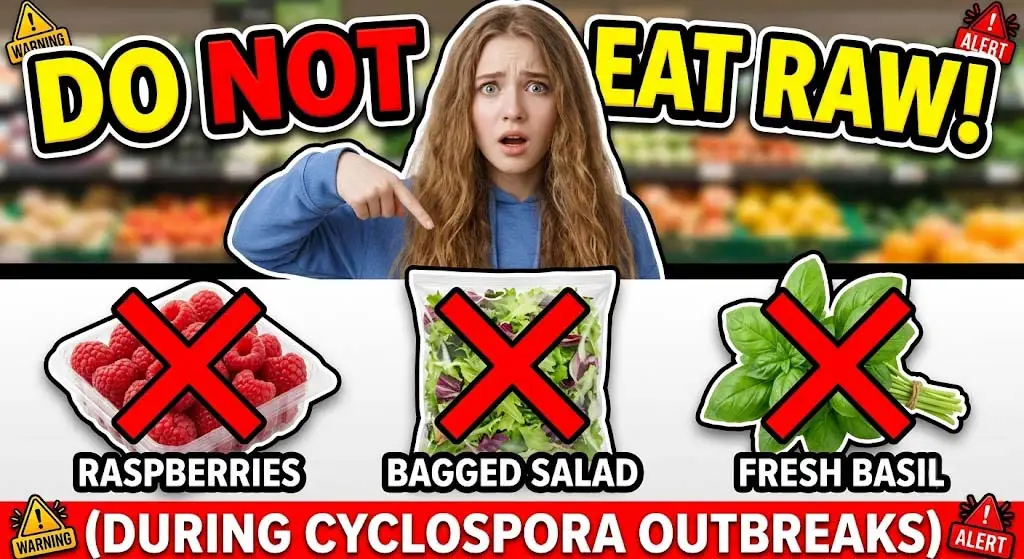
During an active Cyclospora outbreak, consumer vigilance around raw produce is essential. The parasite’s oocysts resist routine washing and survive for weeks on moist surfaces.
The Danger List: Cyclosporiasis Foods to Avoid Until the Outbreak Resolves
When the CDC and FDA are actively investigating a multi-state cyclosporiasis outbreak, the most powerful protective action you can take is temporarily modifying your diet to eliminate the most likely contamination vehicles. This is not about permanent food avoidance or developing disordered eating patterns around fresh produce—it’s about short-term, evidence-based risk reduction during a documented public health emergency. Fresh fruit and vegetables are absolutely essential for long-term health, but during an active outbreak with an unidentified specific source, certain items carry disproportionate risk based on historical Cyclospora contamination patterns.
- All Pre-Packaged Salad Mixes and Bagged Lettuce: The moist, enclosed environment of a plastic bag is ideal for Cyclospora oocyst survival. Even if the package says “triple-washed” or “ready to eat,” washing does not reliably remove protozoan parasites, which adhere tightly to leaf surfaces and can hide in microscopic crevices. Temporarily switch to whole heads of lettuce that you can wash thoroughly and peel away outer leaves—or better yet, cook your greens.
- Fresh Berries (Raspberries, Blackberries, Strawberries): Berries have been implicated in multiple past Cyclospora outbreaks due to their delicate, creviced surfaces that trap oocysts and their typical consumption without cooking. Frozen berries that you will cook into compotes or baked goods are fine; fresh, raw berries are a temporary risk during an outbreak.
- Fresh Cilantro, Basil, and Other Fresh Herbs: Fresh herbs, particularly cilantro, have been linked to Cyclospora outbreaks traced to growing regions where irrigation water contamination is an issue. Cooked herbs in soups and sauces pose no risk; raw herb garnishes and pestos made from raw basil should be avoided until the outbreak source is identified.
- Pre-Cut Fruit Platters and Fruit Salads: Any fresh produce that has been cut, mixed, and packaged creates additional surface area for contamination and potential cross-contamination between different fruit types. Stick to whole fruits that you wash and cut yourself immediately before eating.
- Imported Produce from Regions with Endemic Cyclospora: Historically, Cyclospora outbreaks in the U.S. have been linked to imported produce, particularly from regions where the parasite is endemic year-round. Pay attention to country-of-origin labels and outbreak investigation updates that identify specific growing regions. When in doubt, choose produce from domestic sources with strong food safety oversight—or cook imported produce thoroughly.
What You Can Safely Eat Right Now
A temporary shift toward cooked vegetables, thoroughly washed and peeled fruits, and heat-treated foods does not mean abandoning nutrition. Cooked greens like sautéed spinach, steamed broccoli, roasted asparagus, and grilled zucchini deliver abundant vitamins and fiber with zero Cyclospora risk—the parasite is killed instantly at temperatures above 160°F. Fruits with thick, intact peels that you remove yourself (bananas, oranges, melons you wash and cut at home, avocados) are excellent safe choices. Frozen produce that you cook thoroughly before eating is perfectly safe, as commercial freezing does not reliably kill Cyclospora but cooking does. This outbreak will end, and you will return to enjoying fresh salads without fear. In the meantime, let the science of food safety guide your temporary menu adjustments.
The Glow With Nature Kitchen Safety Protocol: Protecting Your Household from Cyclospora
During an active outbreak of cyclosporiasis, your kitchen needs to become a food safety fortress. The protocols outlined below are based on FDA food safety guidance, CDC outbreak recommendations, and the collective wisdom of food virology and parasitology researchers who understand exactly how these resilient pathogens move from farm to fork. Implement these steps immediately, and maintain them throughout the duration of the CDC’s active outbreak investigation.
Step 1: Rethink Your Produce Washing Routine
Standard produce rinsing—a quick pass under cold running water—is grossly insufficient for parasite oocysts. Instead, adopt a rigorous three-step wash protocol for any fresh produce you intend to eat raw. First, wash your hands thoroughly with soap and warm water for a full 20 seconds before handling any produce. Second, rinse the produce under cold running water while gently rubbing the surface with your clean fingers or a dedicated soft produce brush (never use the same brush you use for dishes). Third—and critically—dry the produce completely with a clean paper towel or a dedicated, freshly laundered cloth towel. The friction of drying physically dislodges additional oocysts that rinsing alone misses. For leafy greens, separate the leaves and rinse each one individually; for berries, place them in a colander and spray them with a kitchen sink sprayer while gently agitating. Never soak produce in a sink filled with water, as this simply redistributes contamination from one item to another.
Step 2: Sanitize All Food Contact Surfaces
Cyclospora oocysts can survive on countertops, cutting boards, and sink surfaces for extended periods, creating opportunities for cross-contamination to other foods. After every meal preparation session that involves fresh produce, sanitize all surfaces with a solution of 1 tablespoon of unscented liquid chlorine bleach per gallon of water. Let the solution sit on surfaces for at least one minute before wiping dry. For cutting boards—especially wooden ones with knife grooves that can harbor oocysts—consider using a separate, dishwasher-safe plastic board for produce, and run it through a full hot wash and heated dry cycle after each use. The CDC’s environmental hygiene guidance for foodborne outbreaks emphasizes that surface decontamination is just as important as hand hygiene in breaking the chain of transmission within a household. (CDC: Four Steps to Food Safety)
Step 3: Cook Produce That Can Be Cooked
The single most effective Cyclospora kill step is heat. Any produce that can be cooked should be cooked during an active outbreak. Sauté spinach and kale for your morning eggs instead of eating them raw. Roast your broccoli, cauliflower, and Brussels sprouts. Steam green beans instead of tossing them into a cold salad. The 160°F threshold for instantaneous parasite inactivation is easily achieved with standard cooking methods. This temporary shift not only eliminates your risk but also deepens and sweetens the flavors of many vegetables through caramelization—a culinary silver lining to an otherwise frustrating public health situation.
Step 4: Practice Uncompromising Hand Hygiene
If someone in your household becomes ill with confirmed or suspected cyclosporiasis, hand hygiene becomes absolutely non-negotiable. Cyclospora oocysts passed in stool are not immediately infectious—they need days to sporulate—but maintaining rigorous hand washing after bathroom use and before any food handling prevents any other enteric pathogens from complicating the clinical picture. Use soap and warm water, scrub for a full 20 seconds (sing the “Happy Birthday” song twice through), and dry with a disposable paper towel during the acute illness period. Alcohol-based hand sanitizers are less effective against protozoan parasites and should be considered a supplement to—not a replacement for—thorough hand washing with soap and water.
The 2026 Cyclospora Risk & Food Safety Decision Matrix
Use this quick-reference guide to navigate your food choices and symptom assessment during the ongoing outbreak across Louisiana, Oklahoma, Michigan, and other affected states.
| Food Category or Symptom Scenario | Risk Level & Key Details | Recommended Action Plan |
|---|---|---|
| Pre-packaged salad mixes (any brand) | High risk. Moist enclosed environment ideal for oocyst survival; washing does not reliably remove Cyclospora. | Avoid entirely during outbreak. Switch to whole heads of lettuce; peel outer leaves and wash thoroughly, or cook greens. |
| Fresh berries (raspberries, blackberries, strawberries) | Moderate-high risk. Creviced surfaces trap oocysts; rarely cooked before consumption. | Use only if thoroughly cooked (compotes, baked goods). Avoid raw berries until source is identified. |
| Fresh herbs (cilantro, basil, parsley) | Moderate risk. Multiple past outbreaks linked to fresh herbs; high surface area, eaten raw. | Add herbs during cooking rather than as raw garnish. Avoid raw pestos and chimichurris temporarily. |
| Whole fruits with intact peel (bananas, oranges, melons you cut) | Low risk. Peeling removes external contamination. Wash melons before cutting to avoid transferring oocysts to flesh. | Safe to consume. Wash melon rinds thoroughly with brush before cutting. Discard peels immediately. |
| Explosive watery diarrhea persisting >3 days with fatigue | High clinical suspicion for cyclosporiasis. Risk of dehydration and prolonged illness without specific treatment. | Seek medical evaluation. Request Cyclospora PCR testing (may need multiple stool specimens). Do not self-treat with anti-diarrheals that may prolong infection. |
Frequently Asked Questions: Cyclosporiasis, Lettuce Safety & the Current Outbreak
Cyclospora cayetanensis is a protozoan parasite—not a bacterium or virus—that infects the small intestine and causes prolonged, watery diarrhea. Unlike norovirus (which hits within hours and resolves in 1–3 days) or Salmonella (which often causes bloody diarrhea and higher fevers), Cyclospora has a longer incubation period (about one week) and causes a distinctive waxing-and-waning illness that can persist for weeks without specific antibiotic treatment. The explosive, watery nature of the diarrhea and the profound fatigue are hallmark features.
During an active CDC-investigated cyclosporiasis outbreak, there is no way for an individual consumer to visually determine whether a particular bag of lettuce is contaminated. Cyclospora oocysts are microscopic and produce no off-odors, discoloration, or slime. The safest approach is to check the CDC and FDA websites for specific product recall notices and, in the absence of a definitive source identification, to avoid raw leafy greens from broad distribution channels until the outbreak is declared over. Cooked greens remain safe.
Because the incubation period for Cyclospora can be as long as two weeks, you are not out of the woods immediately after eating a potentially contaminated product. Do not panic—many exposed individuals do not develop clinical illness. Monitor yourself carefully for the onset of watery diarrhea, cramping, bloating, and fatigue over the next 14 days. Keep the product packaging if you still have it, as the lot number and purchase information could assist public health investigators. If symptoms develop, seek testing promptly.
Yes, if the restaurant is sourcing its produce from the same contaminated supply chain implicated in the outbreak. During active investigations, many public health departments advise high-risk individuals to avoid raw salads and fresh herb garnishes at restaurants entirely, as you cannot verify the source or the washing protocols used. Asking your server about the origin of the greens is reasonable, but the information may not be available. Hot cooked dishes are the safer restaurant choice for the duration of the outbreak.
These three states have reported the highest number of laboratory-confirmed Cyclospora cases per capita during the 2026 outbreak, based on data shared by their respective state health departments and the CDC. The clustering in these geographically diverse regions—Gulf Coast, Great Plains, and Upper Midwest—strongly suggests a widely distributed contaminated product rather than a localized environmental source, making the outbreak investigation particularly urgent and complex.
Conclusion: Outsmart the Parasite, Protect Your Plate, and Stay Vigilant
The 2026 cyclosporiasis outbreak has delivered an uncomfortable but essential wake-up call about the vulnerabilities baked into our modern, centralized fresh produce supply chain. When a microscopic parasite can contaminate irrigation water in one growing region and send hundreds of people in Louisiana, Oklahoma, Michigan, and beyond rushing to emergency rooms with explosive diarrhea, it becomes painfully clear that individual consumers are the last line of defense in a system where traceability often lags weeks behind illness onset. You cannot personally inspect every farm or audit every irrigation source. But you can arm yourself with knowledge, modify your eating patterns temporarily based on credible public health guidance, and transform your kitchen into a space where food safety is practiced with the seriousness it deserves.
This outbreak will end. The CDC and FDA investigators will eventually identify the specific growing operation or processing facility responsible, the contaminated product will be removed from commerce, and the case counts will decline. But the lessons must endure. Always wash your produce with intention, not just a cursory splash under the faucet. Stay informed about active foodborne outbreak investigations through official government channels rather than relying on social media rumor. Know the cyclosporiasis foods to avoid when an outbreak is unfolding in your region. Advocate for yourself in medical settings when your symptoms don’t fit the “standard” viral gastroenteritis narrative. And remember that fresh produce, consumed safely and intelligently, remains one of the most powerful pillars of human health—just one that requires respect for the invisible biological realities that can occasionally turn a nourishing salad into a vector for weeks of misery. Your health sovereignty depends on this vigilance, and at glowwithnature.com, we will continue to provide the clear, science-backed information you need to navigate these challenges with confidence.